












 The Need
 The Challenge
 The Solution
 Value Delivered


The Need
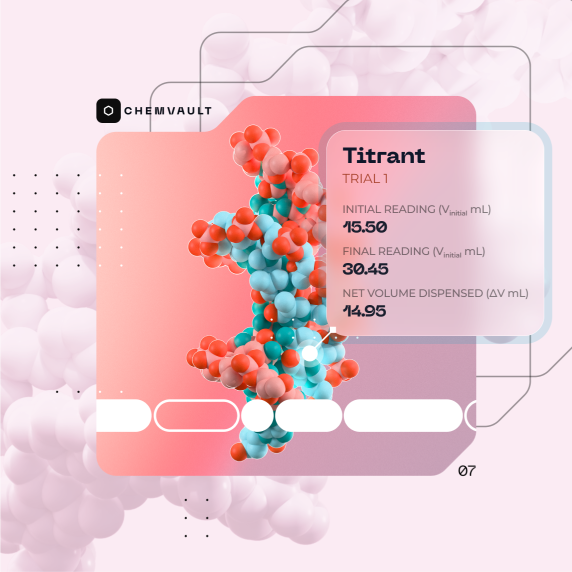
A leading provider of instruments and know-how for chemical analysis, in the lab and in process, with deep specialisation in titration. Its instruments generate machine-produced analytical determination records, not static reports but the structured outputs of titration runs, calibration sequences, sensor readings, and the calculation chains that turn raw measurement into a defensible result. Customers depend on those records long after the run is complete, exporting them for audits and reference measurements years later. The data has to remain available, intact, and trustworthy for its full 10-year regulated retention period.
The legacy archive that held this data depended on infrastructure tied to Windows 10. As Windows 10 reaches end of support, the platform behind the archive loses support with it, leaving regulated determination records on a system that can no longer be patched, secured, or kept compliant.
The company had already built a next-generation system with a new data format. But that system cannot read the legacy data, and it carries no archive of its own. The historical records, and the analytical context needed to interpret them, were about to be stranded: still required for audits, no longer readable by current software, and sitting on a platform with a countdown on it.
The Challenge
The challenge was not simply storing historical reports, but preserving the ability to reconstruct and trust analytical determinations years after the original instruments and platforms became obsolete.
That meant a separate, purpose-built tool whose job was reconstruction, not archival. It had to read the legacy data format, rebuild the logic that turned measurement into determination, and re-present each historical record so it could be viewed, inspected, validated and exported, with the calculation chain, calibration references, and instrument metadata intact enough to support audit and reference-measurement use cases years from now. Scope it wrong in either direction and the project either balloons into a full migration or fails its one purpose.
The decision also had to be made under pressure. The end-of-support date was fixed, so any solution had to be specified, approved, and built before further actions. And because this was an investment decision, it had to be justified to internal stakeholders who needed to see what they were buying and what it would return, on top of the usual demands of a regulated environment: data integrity, controlled access, an audit trail, and compliance obligations that shift with where the system is hosted.
The Solution
BGO Software ran a product discovery engagement that turned an ambiguous problem into a concrete, decision-ready plan.
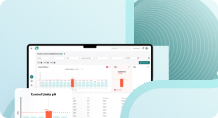
Rather than describe the system on paper, BGO built a clickable prototype: a working walkthrough of the reconstruction tool that decision-makers could see and click through for themselves. It demonstrated how legacy determination records would be read, reconstructed, organised, viewed, and exported in a modern web interface, and how access would be controlled across roles, from administrators down to users who could only view a permitted subset of records.
Behind the prototype sat the harder piece of work: understanding the legacy data format deeply enough to specify how each determination would be reconstructed. That meant mapping the logic that linked raw sensor output, calibration references, and instrument metadata into a defensible analytical result, and re-expressing that logic in a modern web stack so historical records remain inspectable and reproducible long after the originating instruments and platforms are out of service.
Alongside the prototype, BGO produced an ROI analysis aimed squarely at the internal decision-makers who would approve the build, translating a technical preservation problem into a business case they could act on.
The engagement was led as much by analysis as by design. An embedded business analyst worked closely with the client and surfaced requirements and edge cases the original brief had missed, particularly around validation, traceability, and the conditions under which a historical determination can be considered trustworthy, sharpening the scope before any production work was planned.
The output was a defined, buildable specification: a documented set of software requirements and design specifications (SRS / SDS), capturing exactly what the system should do and how it should be built.
Value Delivered
The discovery gave the company something it did not have at the outset: a validated, build-ready answer to a deadline-driven problem, with the evidence attached to make the call. The work was delivered as a structured plan and prototype, the foundation for development, rather than as a deployed system.
Its value was clarity. The prototype removed the guesswork from the conversation, and the specification meant a green light could move straight into build with the scope already settled, before the clock ran out. More than a tool to read old files, what was specified was a way to keep a decade of regulated analytical intelligence usable, auditable, and trustworthy, well past the end of the platforms that produced it.
In Their Words
“We came in thinking we knew exactly what we needed. BGO’s team raised validation and data-integrity scenarios we simply hadn’t considered, gaps that would have surfaced much later. The prototype made it real, and we walked away with a far clearer picture than we started with.”
Project Lead, Switzerland-based analytical instruments company