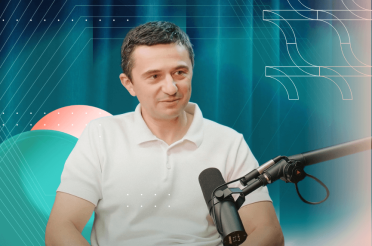











Speaking on Bulgaria ON AIR’s morning program Bulgaria Sutrin, BGO Software CEO Ivan Lekushev shared his perspective on the future of artificial intelligence in healthcare. The conversation explored how AI can help physicians navigate increasing medical complexity, why trust and regulation remain essential, and what a more connected, data-driven healthcare system could look like in the years ahead.
Modern Medicine Generates More Information Than Ever
Healthcare is entering a new era where the amount of available information is growing faster than any individual can reasonably process. From medical histories and laboratory results to clinical research, imaging, and real-time patient data, physicians are expected to interpret an enormous volume of information before making treatment decisions.
According to Lekushev, this is precisely where artificial intelligence can provide the greatest value.
“AI gives us the ability to process extraordinary amounts of information.”
As medicine becomes increasingly specialized and data-intensive, AI has the potential to help healthcare professionals identify patterns, analyze complex datasets, and access relevant information more efficiently than ever before.
However, technology alone is not the answer. The true value lies in how that information is used to support better clinical judgment.
AI Should Support Doctors, Not Replace Them
One of the strongest messages from the discussion was that while AI systems may become increasingly capable of analyzing information and generating recommendations, healthcare remains fundamentally human.
“Patients will always want a human being in front of them – someone who can take responsibility and show empathy.”
The doctor-patient relationship is built on trust, communication, and accountability. These are qualities that technology can support but cannot replace. For this reason, Lekushev believes the future of healthcare will not be defined by autonomous AI doctors. Instead, it will be shaped by physicians who are empowered by intelligent tools that help them make better-informed decisions.
AI as a Second Layer of Safety
Artificial intelligence is already finding practical applications in healthcare through technologies such as Clinical Decision Support Systems. These systems allow physicians to enter patient information and receive recommendations based on established medical knowledge, clinical evidence, and decision pathways.
“The system can generate a decision tree and suggest an appropriate therapy, but the final decision always belongs to the physician.”
Rather than replacing medical expertise, AI serves as an additional layer of analysis that can help reduce uncertainty and support clinical decision-making. Lekushev describes this as a “second layer of safety” – an intelligent assistant capable of reviewing large amounts of information and helping physicians identify the most appropriate course of action.
In a field where decisions can have life-changing consequences, such support can play an important role in improving consistency and reducing the risk of error.
Trust and Regulation Will Shape Adoption
Despite the rapid pace of technological progress, healthcare remains one of the most heavily regulated and cautious industries in the world. According to Lekushev, artificial intelligence is still at the beginning of its journey in healthcare, partly because the regulatory frameworks governing its use continue to evolve.
“Doctors need to start trusting AI, but that will take time.”
As with many transformative technologies, adoption will depend not only on technical capabilities but also on clear regulations, validation requirements, and confidence among healthcare professionals. Over the coming years, regulators, technology providers, and healthcare organizations will need to work closely together to establish the standards that allow AI to be safely and responsibly integrated into clinical practice.
Beyond AI: The Future of Personalized Healthcare
The discussion also touched on a broader vision of digital healthcare. Artificial intelligence is only one part of a larger transformation that includes telemedicine, remote monitoring, connected medical devices, and continuous access to patient data.
Healthcare still lags behind many other industries in terms of digitalization. Technologies that have become commonplace elsewhere are only beginning to realize their full potential in healthcare. Lekushev pointed to the growing role of telemedicine and connected devices as examples of how care delivery may evolve.
Imagine a world where a physician can securely access a patient’s blood pressure, heart rate, biometric indicators, and other health data over an extended period of time. Instead of relying solely on information collected during a single appointment, doctors could gain a much more complete picture of a patient’s health and personalize treatment accordingly. Such capabilities could help healthcare providers identify issues earlier, improve monitoring, and make more informed decisions based on real-world patient data.
AI as Healthcare’s GPS
To explain the role AI is likely to play in the future, Lekushev used a simple analogy.
“When GPS technology was introduced, nobody expected it to drive the car. We expected it to provide information that helped us make better decisions, save time, and find the best route.”
Artificial intelligence may ultimately serve a similar purpose in healthcare. Not as a replacement for physicians, but as a trusted assistant that helps them navigate complexity, process information more effectively, and deliver better outcomes for patients.
As healthcare continues its digital transformation, the greatest impact of AI may not come from replacing human expertise, but from helping that expertise reach its full potential.
Watch the Full Interview for Bulgaria ON AIR in Bulgarian

BGO Software is a renowned IT company specializing in healthcare technology solutions. With over 15 years of industry experience, we offer comprehensive technology consulting, software development, and IT infrastructure services. Our focus on healthcare technology enables businesses to mitigate technological risks and accelerate growth, ultimately delivering enhanced value to patients.
link to the author’s linkedin profile