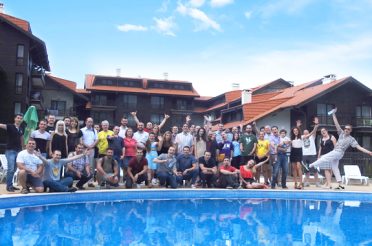








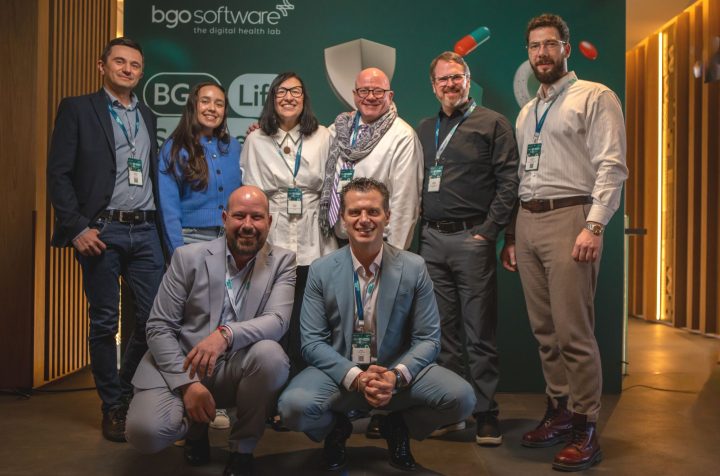
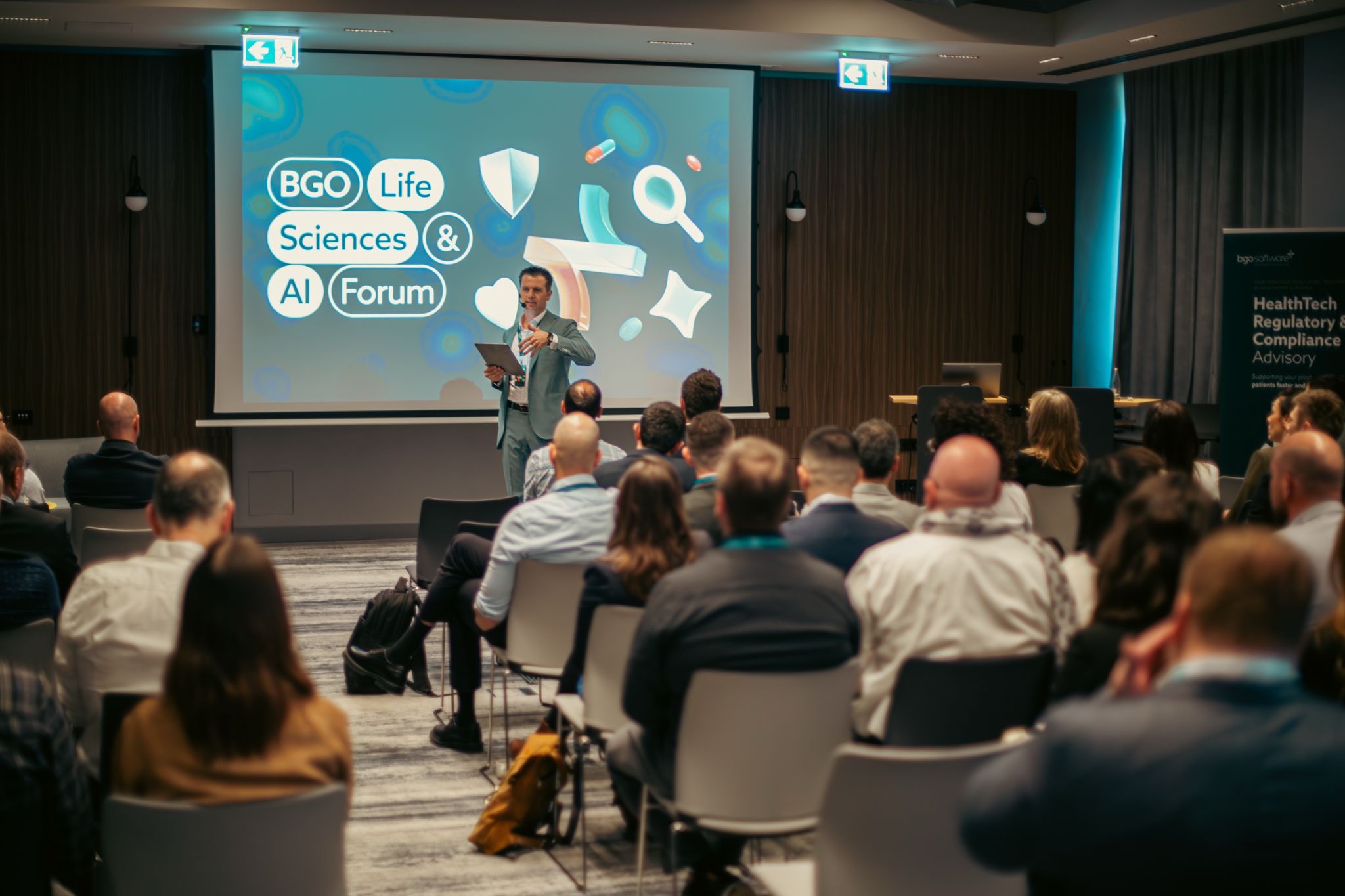
How the BGO Life Sciences & AI Forum brought together practitioners resulted in multydisciplinary network in the chase of supporting the lifesciecnce and healthcare.
Jodilyn Hesse didn’t open with a methodology.
She’s the Senior Director of Software Development Engineering at Labcorp. She had the slides, the framework, the business case. She chose not to start there.
She started with Brody a colleague’s fifteen-year-old son, diagnosed with a rare autoimmune disease, enrolled in a clinical trial. For years, treatment meant difficult infusions. His first dose of the trial drug took seconds.
Then Zane. Born with half a heart. Four open-heart surgeries before age four. Then her father, given two years to live, six years ago, whose platelets went from eight to the 150s on a trial drug. He was 86 in the photograph she showed. Still driving.
She put down her drive.
Her team processes over two million clinical trial records per day. She doesn’t accept a 1% error rate. One percent is 20,000 records. Those records belong to real people. That’s the premise the entire forum was built around. Then BGO Software CEO Ivan Lekushev opened the forum with the line that became its anchor:
“It’s just data and software — until it saves a life.”
The forum was built around the gap between those two clauses.
The Problem Nobody Wants to Name First
Kurt In Albon, founder of INK Pharma Consult, named the upstream problem with unusual precision. For decades, pharmaceutical organizations have generated vast quantities of data but almost exclusively for compliance, not quality. The result, he argued, is what he called “data cemeteries”: warehouses of audit-ready, ALCOA+-compliant records that are structurally useless for machine learning. A model trained on high-volume but contextually poor data will produce unreliable outputs outputs that could affect batch release decisions, process control parameters, or clinical trial endpoints.
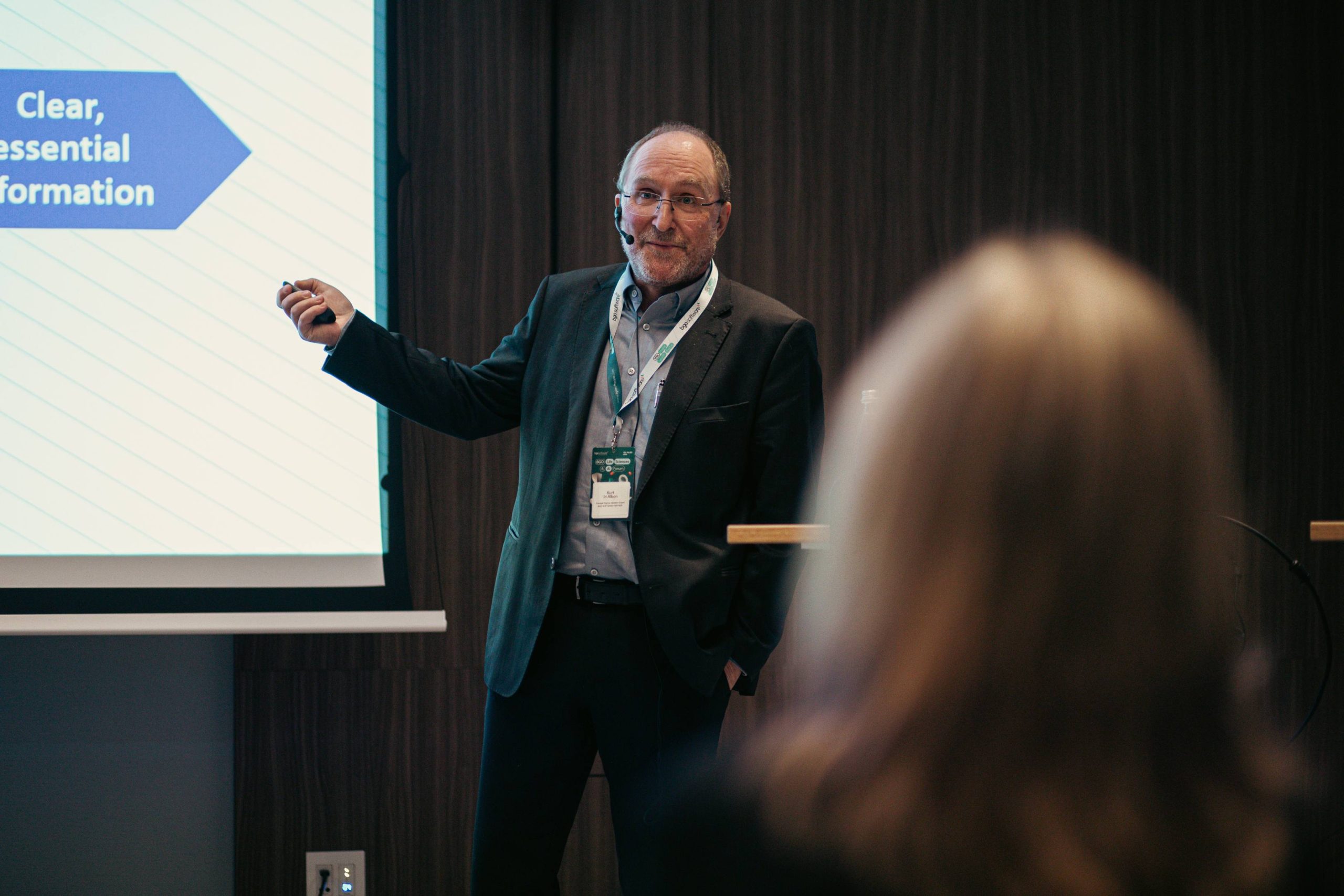
His proposed solution, a Data Quality Assessment (DQA) Score, establishes a measurable, auditable gate before any AI development begins. With the FDA’s AI Draft Guidance, ISPE GAMP AI guidance, and the EU AI Act all converging on similar requirements, he made clear: the window for informal pilots without structured data governance is closing.
What Success Actually Looks Like
The forum’s value was in its specificity. Each speaker arrived with numbers.
Roche’s Tobias Ladner, who has spent nine years building the company’s Data Computation Platform, presented two manufacturing applications already in production: an autoclave anomaly detection model that identifies sterilization cycle deviations before batch release, and a computer vision application that catches filling needle contamination indicators that previously only surfaced in downstream quality checks. Neither application bypassed the V-Model. Both required engineering the validation approach to accommodate a model that updates.
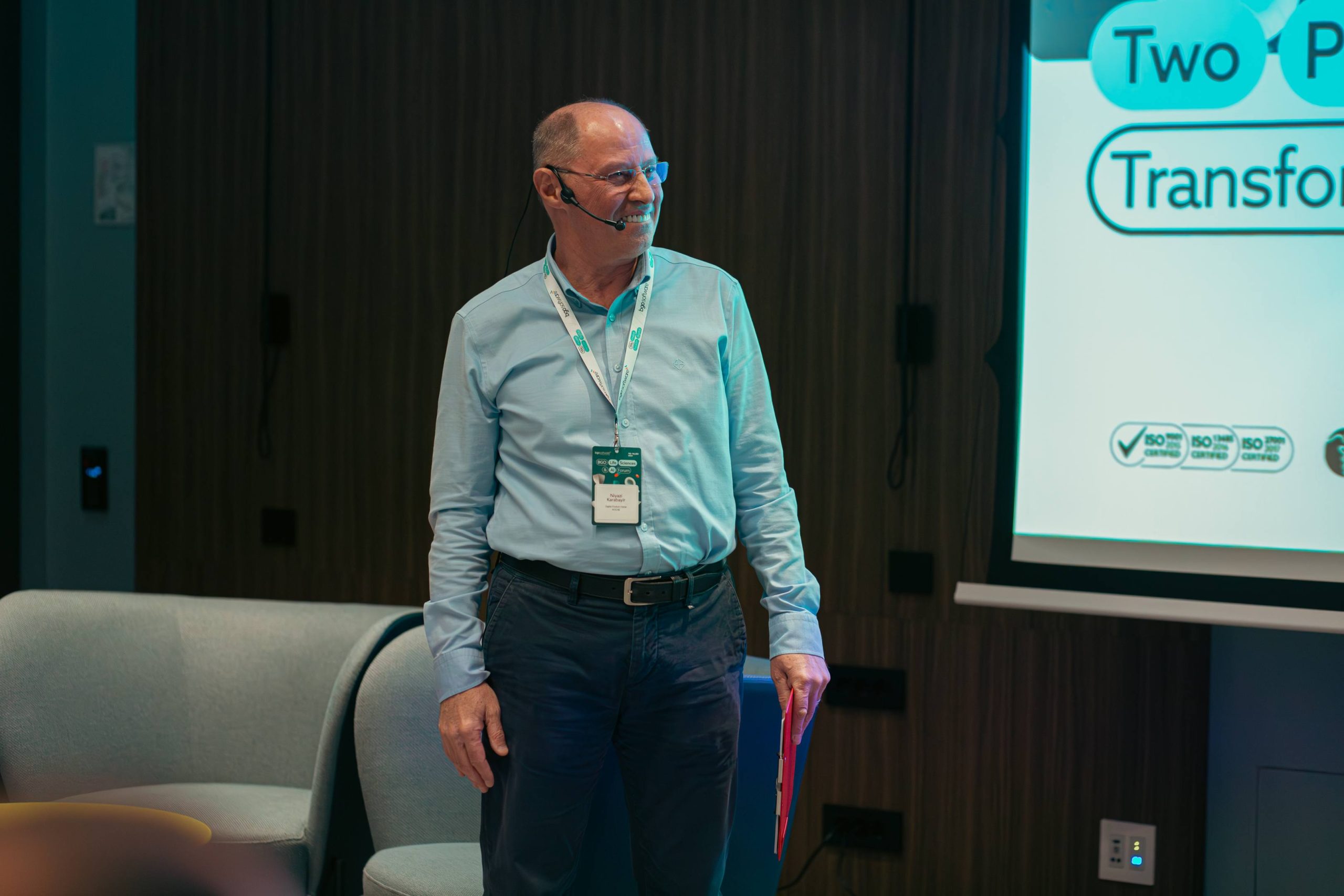
Niyazi Karabayir, Roche’s Digital Product Owner and BGO’s long-term partner on the platform, opened his session with a show of hands: who in the room has a single, trusted view of their data without reconciling spreadsheets or waiting for a report? Almost no one raised their hand.
“That’s why we’re here. And it took us almost ten years.”
The 95% Problem and the Way Through It
Dr. Assen Batchvarov of Quaisr delivered the forum’s most pointed provocation: 95% of AI pilots in life sciences never reach production. The failure, he argued, isn’t technical. It’s architectural. General-purpose LLMs built without grounding in pharmaceutical-specific ontology process parameters, assay specifications, regulatory constraints impress in demos and fail in regulated deployment.
His alternative: scientific orchestration. Auditable, traceable, explainable workflows connecting validated models to validated data environments. Two implementations anchored the argument with numbers a Cell Line Selection Agent saving over $1 million per year in reduced redundant characterization work, and a Process Operator Agent delivering over $2 million in annual operational efficiency.
The same pattern repeated across Day Two. Dominique Surinx of Ansana presented a smart sensor platform for surgical instrument tracking that could save a standard hospital with 20 operating suites approximately €3 million annually. Kardi AI’s remote ECG monitoring belt achieves a 30% arrhythmia detection rate across 300,000 users compared to the 5–7% standard Holter benchmark with 300 lives already attributed to
its detection in the Czech Republic alone. Prevention costs €199 per year. Post-stroke care costs the state €25,000.
What the Forum Made Clear
The organizations represented at this forum – Roche, Labcorp, Quaisr, Ansana, Savor Health, Hemeo, Kardi AI, Adipharm are not early adopters running speculative pilots. They are organizations with production systems, clinical validation data, and regulatory clearances, operating in environments where “fail fast” is not a legitimate posture.
What they share isn’t a common technology stack. It’s a common sequence: data quality before data science, compliance architecture before model selection, change management treated as a first-order problem rather than an afterthought.
That sequence is unglamorous. It doesn’t make for impressive demo reel content. But it is the operational difference between the 5% of pharma AI implementations that survive production and the 95% that don’t.
“AI doesn’t change what regulated software delivery requires. It changes how long it takes to do it right.” — Ljupcho Hristov, Operations and Solutions Architect, BGO Software
About the Forum
The BGO Life Sciences & AI Forum is part of BGO Software’s commitment to building a practitioner community for rigorous, evidence-based conversation about technology adoption in regulated life sciences environments. The 2026 edition was held March 13–14 in Sofia, Bulgaria, with speakers representing pharmaceutical manufacturers, CROs, digital health companies, and clinical practitioners across Europe and North America.
BGO Software specializes in validated software solutions for GxP-regulated environments — spanning manufacturing intelligence, clinical trial software, regulatory-compliant AI integration, and medical device software development.
Learn more at bgosoftware.com or reach out directly to discuss how the forum’s themes apply to your organization.
The next BGO Life Sciences & AI Forum is in planning. If you’d like to be part of the conversation as a speaker, partner, or attendee get in touch.

BGO Software is a renowned IT company specializing in healthcare technology solutions. With over 15 years of industry experience, we offer comprehensive technology consulting, software development, and IT infrastructure services. Our focus on healthcare technology enables businesses to mitigate technological risks and accelerate growth, ultimately delivering enhanced value to patients.
link to the author’s linkedin profile