









In the stringent world of pharmaceutical manufacturing, translating a data science concept into live production is notoriously slow. Often, an innovative statistical algorithm remains trapped inside a local sandbox because the underlying technology stack lacks a validated path to the factory floor. Bridging that gap moving from analytical idea to operational reality is one of the defining challenges of digital transformation in pharma manufacturing today.
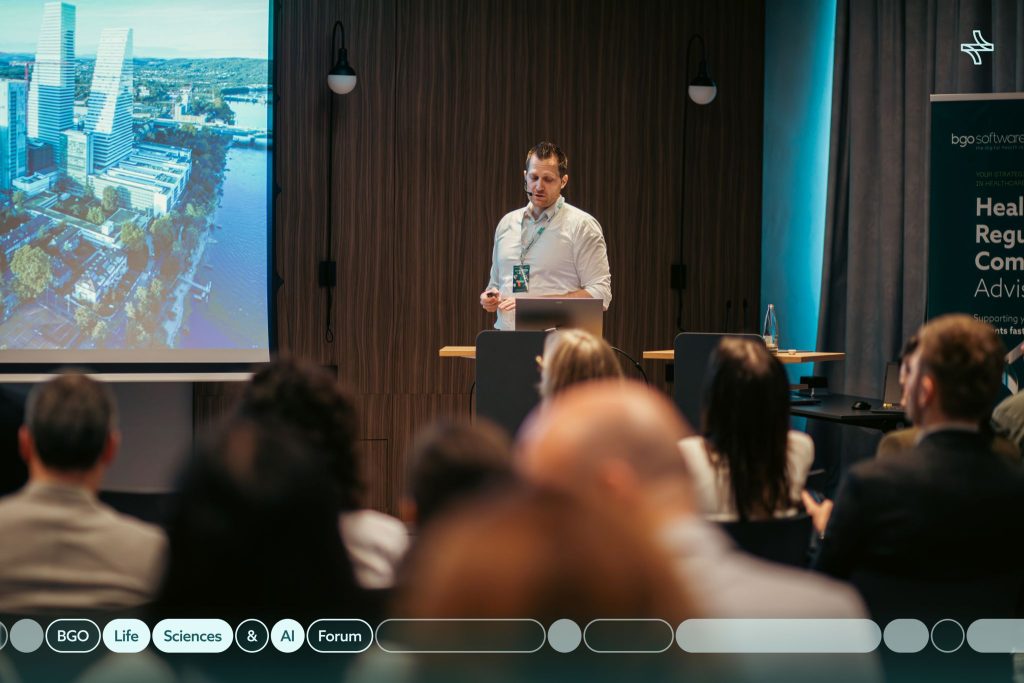
At the BGO Life Sciences & Healthcare Innovation Forum in March 2026, we sat down with Dr. Tobias Ladner, Digital Solutions Lead at Roche with a PhD in Biochemical Engineering. Tobias is the principal architect behind Roche’s Data Computation Platform (DCP) an open-source, GMP-validated analytics ecosystem that has become a reference model for Pharma 4.0 implementation at scale.
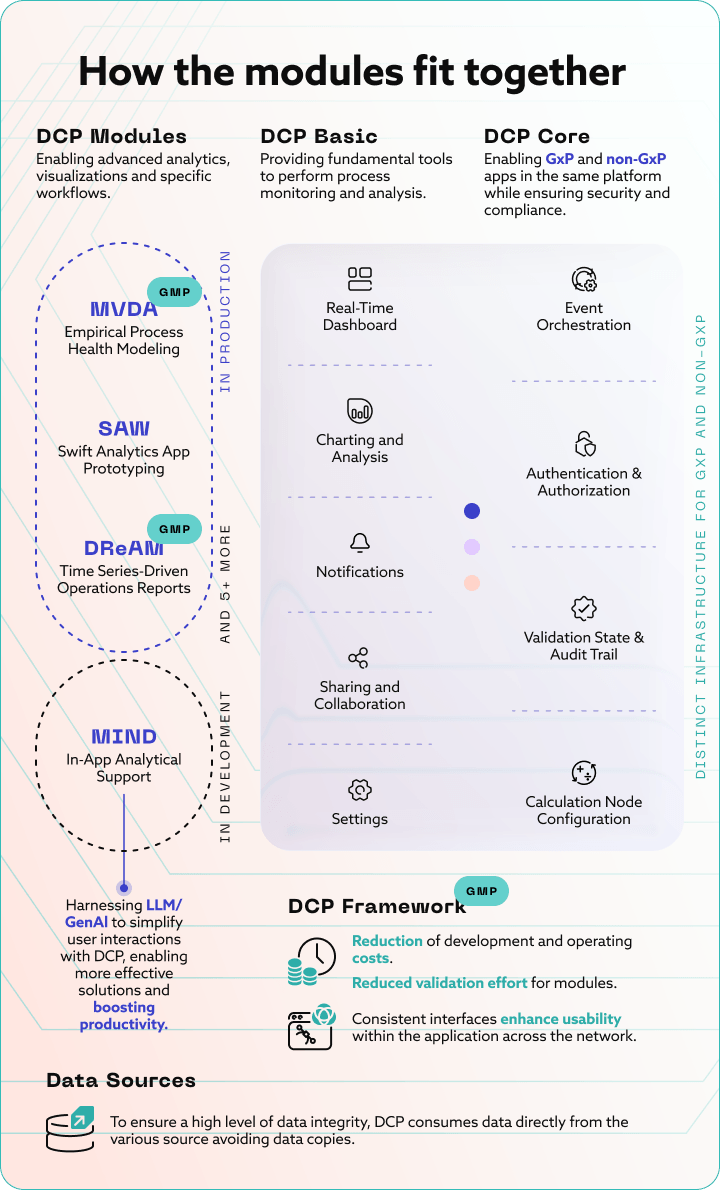
Since the platform’s inception nine years ago, Tobias has worked alongside an integrated engineering team from BGO Software to build a highly adaptable, process-agnostic ecosystem. Today, DCP seamlessly handles datasets across both small and large molecules, serving as a unified analytics layer for specialized bioprocessing steps like fermentation, chromatography, and lyophilization. Operational across more than nine global manufacturing sites, DCP is one of the most mature examples of data-driven digital transformation in the pharmaceutical industry. The platform has been peer-reviewed and published in the Journal of Intelligent Manufacturing, cementing its standing in the Pharma 4.0 literature.
During our interview, Tobias detailed the strategic purpose behind DCP, the long-standing collaboration with BGO Software, and the practical application of Artificial Intelligence (AI) and Large Language Models (LLMs) on the modern manufacturing floor.
Key Takeaways
- Off-the-shelf software can’t solve manufacturing diversity. No single vendor algorithm is flexible enough to handle the breadth of analytical problems across a global pharmaceutical network a modular, custom platform is the only viable path.
- Speed-to-floor is the core metric. The biggest bottleneck in pharma digital transformation isn’t insight generation — it’s the validated deployment of those insights into live production. DCP was built specifically to close that gap.
- AI on the manufacturing floor is a navigation tool first. Before autonomous control, AI’s immediate value is helping engineers find the right analytical module instantly cutting training time and accelerating root-cause resolution.
- Human-in-the-loop is non-negotiable for now. Fully autonomous AI-driven process adjustments remain a distant regulatory reality. The near-term Pharma 4.0 architecture is AI that recommends; humans that decide.
- Cross-site intelligence is the long-term differentiator. A global AI layer that can match a production anomaly in Basel to a solution already deployed in Singapore and surface it in real time is where manufacturing digital transformation delivers its highest ROI.
The Interview
Q: Tobias, it’s great to speak with you. To start, could you explain the “big why” behind the Data Computation Platform (DCP) and what inspired you to build it?
Dr. Tobias Ladner: The core idea behind DCP originated during our initial proof-of-concept phase. At the time, we could have taken the traditional corporate route and purchased an off-the-shelf, commercial software solution. However, I was not convinced that a single, rigid vendor algorithm could successfully solve the diverse array of manufacturing problems we encounter across our global facilities.
Our most significant operational bottleneck was the speed at which we could transition an analytical idea into the live manufacturing space. For example, an engineer might write a brilliant statistical script in R, but a standalone R script cannot simply interact with a validated production line. We lacked a unified, fast-track platform capable of taking an initial concept and deploying it directly into operations.
That is precisely what DCP solves today. By continuously adding specialized modules to the application, we can take new ideas and rapidly transition them from a theoretical concept straight to the manufacturing floor which is, at its core, what digital transformation in pharma manufacturing is all about.
Q: You mentioned that BGO Software has been involved since the very beginning of this journey. How did that initial connection form?
Dr. Tobias Ladner: Honestly, BGO has been right there at the table with us since day one. Nine years ago, BGO was already working on a separate software project within Roche that was experiencing some technical friction at the time. Because their engineers were already on-site, we were in a unique position.
I had recently coded a functional prototype of the platform myself to convince our executive management to fund a full-scale deployment. Once we secured approval, it was straightforward to align with the BGO leadership team, bring their specialized developers onto our project, and begin scaling. It is a luxury in our industry to say that the same core engineering team from BGO has remained embedded within our company for nearly a decade.
Understanding how to pair the right technology stack with the specific demands of a GMP-regulated environment is non-trivial — a challenge explored in detail in BGO’s article on tech stacks and key success factors in building GMP validated systems.
Q: From an architectural standpoint, why was an external partnership with a specialized life sciences IT company like BGO necessary for Roche?
Dr. Tobias Ladner: The reality is simple: Roche is a healthcare and pharmaceutical innovator, not a dedicated software company. Because our core competency is medicine, it is structurally difficult within a massive life sciences corporate framework to open up internal positions dedicated exclusively to software developers. That is exactly why Roche heavily utilizes strategic outsourcing.
We needed the agility to assemble a highly proficient, validated software development team rapidly. BGO had an excellent track record with us through our legacy system integrations, so continuing that partnership was a logical choice. We had a specific demand for senior engineers who could build out complex analytical infrastructure, and BGO fulfilled that requirement directly.
Process Architecture: Upstream vs. Downstream Analytics
In biopharmaceutical manufacturing, the production line is broadly divided into two major phases:
- Upstream Processing (Fermentation): Culturing live cells in bioreactors to express the target protein or therapeutic molecule.
- Downstream Processing (Chromatography & Purification): Separating, isolating, and purifying the target molecule from cell debris.
Dr. Ladner’s DCP platform is explicitly designed to be process-agnostic, meaning its underlying data models can ingest variables from both phases, allowing engineers to track anomalies across the entire manufacturing lifecycle. Effective healthcare data integration across these distinct process stages is what makes unified, real-time oversight possible.
Q: Given the nine-year foundation you and BGO have constructed, the platform has grown significantly. As the system becomes more advanced, how are you leveraging AI and Large Language Models (LLMs) to support operations?
Dr. Tobias Ladner: There is an important distinction to make here regarding how AI is applied at Roche. Accelerating the initial discovery of new therapeutic drug molecules is an entirely separate branch of the organization handled by our Genentech Research and Early Development (gRED) divisions. They are heavily investing in AI clusters and collaborating closely with entities like NVIDIA to crunch molecular datasets.
In our world the manufacturing space the role of AI within DCP is entirely operational, and it reflects the broader promise of Pharma 4.0: intelligent, data-driven systems that augment human decision-making on the production floor. Because our platform has grown so comprehensive, the sheer volume of options and analytics tools can become highly complex. When a plant engineer encounters a specific production anomaly, it can be challenging for them to quickly figure out the optimal tool or direction to resolve it.
In the immediate term, we are using AI to instantly demystify our vast analytics toolbox. An engineer can simply ask the platform, “I want to evaluate this specific batch parameter variation,” and the AI will instantly identify the exact tool or module required. This drastically accelerates our internal training timelines.
Long-term, we want to fundamentally shift why we evaluate data. Historically, humans create visual charts and graphs because we need a visual interface to extract insights. But with advanced AI, the model can analyze the underlying mathematical matrices directly and simply present us with the final conclusion, bypassing the need to generate static charts altogether.
Our current module infrastructure acts as a foundation for this. Right now, DCP is completely optimized to run within a web browser. However, browsing menus is not the most natural interaction model for an operator working on a noisy manufacturing floor. We are developing an AI-driven, voice-activated application assistant currently being built as an extension of the MIND module within the DCP framework. The operator simply asks a question, and the agent automatically triggers the correct underlying analysis in the background and speaks the exact conclusion. This makes our root-cause evaluations incredibly rapid and keeps our manufacturing loops stable.
The future of Pharma 4.0 isn’t full automation. It’s intelligent human augmentation.
Regulatory Standards: Annex 11 and Automated Validation
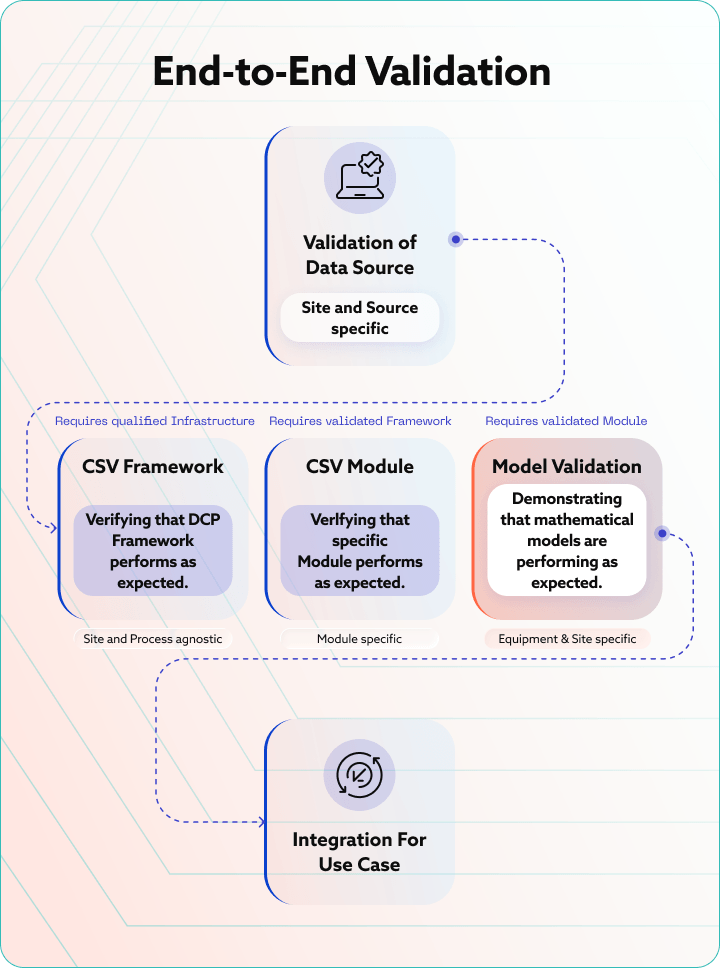
Computerized systems used in pharmaceutical manufacturing must comply with strict international regulatory annexes, such as EMA Annex 11 and FDA 21 CFR Part 11. These frameworks dictate that any software change must undergo rigorous Computer Software Assurance (CSA) or validation to guarantee that data processing is accurate and auditable.
To prevent these strict validation rules from slowing down production updates, Tobias and BGO Software are actively developing automated validation scripts that programmatically run compliance checks during software updates. For a deeper look at how GMP documentation frameworks have evolved, see BGO’s overview of what the newest edition of GAMP®5 brings to the table, as well as the role of Electronic Batch Record (EBR) software in GMP compliance.
Q: Can this type of AI implementation be utilized to maintain a “Golden Batch” standard actively preventing variations or deviations before they occur?
Dr. Tobias Ladner: That is an excellent question, but what you are describing is closing the automated loop completely, which requires triggering a direct, automated mechanical action on the floor based on an AI’s decision. Honestly, that capability is much further away.
Validating and qualifying an LLM to the level where a health authority like the FDA allows it to make autonomous, safety-critical processing adjustments on its own is an incredibly tough regulatory hurdle. We are not going to see that in the first stage of deployment.
Instead, the immediate future will firmly maintain a “human-in-the-loop” architecture. The AI will synthesize massive amounts of data to provide a clear, contextualized recommendation so that the human operator can make a highly informed decision.
Years ago, the industry attempted to deploy automated operator guidance on the shop floor. The initiative failed because we lacked a contextual data layer capable of connecting a digital data spike to a physical action. LLMs can successfully bridge that gap. The AI can read live batch parameters, detect a microscopic variance, cross-reference it with historical data, and tell the operator on the floor, “You need to open valve 4 right now to save this batch.” In biologics manufacturing, where a 5% yield increase can equal millions of dollars, that speed is invaluable.
This is the defining Pharma 4.0 architecture in practice: not full automation, but intelligent human augmentation the core thesis behind BGO’s pharma data management solution built on the DCP platform.
Human-in-the-Loop AI Architecture
The diagram below illustrates how DCP’s data layer and AI evaluation sit between the physical manufacturing floor and the human operator — enabling rapid, evidence-based guidance without removing the human from the decision chain.
Q: For a global enterprise like Roche, how does this software scale across multiple international plants producing the same product?
Dr. Tobias Ladner: That highlights one of our most significant structural advantages. Large corporations do not rely on a single manufacturing site; we produce identical therapeutic proteins across a vast global network of facilities. It is cognitively impossible for human engineers to maintain complete oversight and correlate data across all of those international sites simultaneously.
An integrated AI, however, can cross-reference parameters globally. If a plant in Basel encounters a specific purification drop, the global AI layer can analyze the data pattern, recognize that an identical issue was solved three months ago at our facility in Singapore, and provide the exact remediation strategy instantaneously. That type of intelligent network processing already in place across DCP’s nine-plus active manufacturing sites is our long-term ambition, and it is the clearest expression of what Pharma 4.0 AI looks like in a real-world, regulated environment.
Q: Given your dual passion for engineering and data science, if you were to embark on a PhD again in this current era of technology, where would you focus your research?
Dr. Tobias Ladner: I thoroughly enjoyed my time earning my PhD in biochemical engineering, combining coding, development, and statistics. If I were starting a literature review today, I would look directly at the intersections of separate disciplines.
With modern LLMs capable of generating code efficiently, being a highly specialized expert in just one isolated topic like pure software development is going to become increasingly challenging in the future. The real value lies at the intersection of biology, software engineering, mathematics, and philosophy.
Specifically, I am fascinated by the philosophical and legal questions of accountability for AI-assisted decisions in manufacturing. By law, an AI is not a person. If a machine algorithm makes a critical determination that impacts a production line or an autonomous vehicle, who holds the ultimate liability? Defining those regulatory and ethical boundaries is one of the most critical challenges humankind needs to solve, and it represents a fascinating area for research. Technology can run servers indefinitely without resting, but establishing the ethical frameworks to manage them remains a distinctly human responsibility.

Healthcare business analyst with expertise in marketing and business development, and holds an MPharm degree. He specialises in creating and executing communication strategies that make digital health solutions and pharmaceutical technologies clear, accessible, and resonation for their audiences.
link to the author’s linkedin profile