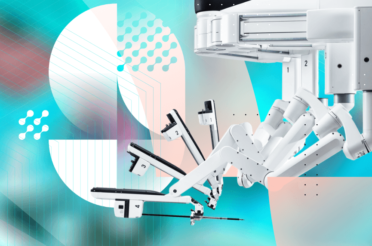











Manufacturing engineers and pharma operations leaders now face a landscape defined by rising sterility demands and shrinking tolerance for process variation. Harrison’s short analysis of 2013–2015 trial attrition states that lack of efficacy accounts for approximately 50% of Phase II and Phase III failures. [1] This is why pharmaceutical robotics stands out as a decisive force: it reshapes how teams manage sterile production processes and lab workflows.
Key Takeaways
- Pharmaceutical robotics standardizes sterile-critical tasks, reducing human variability and contamination in GMP environments.
- With 50% of drug failures linked to efficacy issues, robotics helps stabilize upstream manufacturing and lab workflows.
- Robotic systems like compounding units, arms, machine-vision QC, and AMRs generate traceable data essential for Annex 1 and digital compliance.
- Robotic compounding delivers <1% dose deviation and significantly lowers final-product contamination.
- Robotics brings the most value in high-volume aseptic, lab, and packaging processes, but requires unified data and validated software to scale.
What is pharmaceutical robotics?
Pharmaceutical robotics is the practice of using programmable robotic systems in chemistry and engineering laboratories, particularly in the pharmaceutical industry. They help execute sterile-critical and precision-dependent tasks consistently and with traceability. This technology is a rapidly growing sector that employs machinery to minimize the need for human intervention. Robots in this context enhance the efficacy and safety in drug production and discovery.
Robotic solutions are well-suited for lab work because they handle repetitive motions with precision. They lower contamination risk in sterile zones and support safer handling of hazardous compounds. These systems create clean, traceable workflows that meet Good Manufacturing Practices (GMP) expectations and provide reliable digital records.
Pharmaceutical robotics now supports drug discovery and material flow. Robots prepare samples and run analytical steps. Automated guided vehicles (AGVs) move materials across facilities with documented accuracy. Emerging platforms, including autosamplers and early nanorobotic tools, show how automation pushes lab work toward full end-to-end autonomy. [2]
Key technologies in pharmaceutical robotics

The foundational technologies within pharmaceutical robotics generate essential operational data.
Robotic arms (the workhorses)
Arm pharmacy robots are programmable mechanical limbs that emulate the functions of a human arm with joints and axes that allow for both rotational and linear movements.
- Operational data generated: Robotic arms generate precise logs related to every movement, position, timing, and action performed.
Automated compounding and robotic dispensing systems
These systems, such as Automated Dispensing Devices (ADDS) and centralized robotic picking systems, focus on the precision required for handling and distributing chemical and biological materials. In healthcare settings, automated drug formulation labs enhance accuracy in medication management.
- Operational data generated: These systems log data related to the specific test procedures performed, materials used (lot numbers), filtered volumes, and time of execution to ensure traceability.
QC vision and monitoring systems
Quality control robotics uses automation to minimize risk from microbial, particulate, and pyrogen contamination. This involves systems that rely heavily on digital analysis:
- Operational data generated: These systems generate quality data, including test results, anomaly reports, images of defects, and environmental trend data.
Automated mobile robots (AMRs/AGVs)
AGVs are driverless systems used for the rapid and safe transportation of materials throughout a facility, connecting different operational units. A study shows that replacing three manual material-transport workers with two automated guided vehicles can cut wage costs through defined routes and charging stations. [2]
- Operational data generated: AGVs utilize sensors and scanners to detect obstacles and are equipped to track all movements.
Unifying data streams through software solutions
The key to successful integration of pharmaceutical robotics lies in the digitalization of the workflow. To integrate the varied hardware components (robotic arms, pumps, dedicated stations), a system controller manages all processes. The operational data is then logged into a LIMS (Laboratory Information Management System) to ensure comprehensive traceability.
- Enhanced analytics and compliance: Unification of data allows the robotic company to calculate metrics like the total cost of ownership and identify savings potential. [2-4]
Pharmaceutical robotics in real use cases
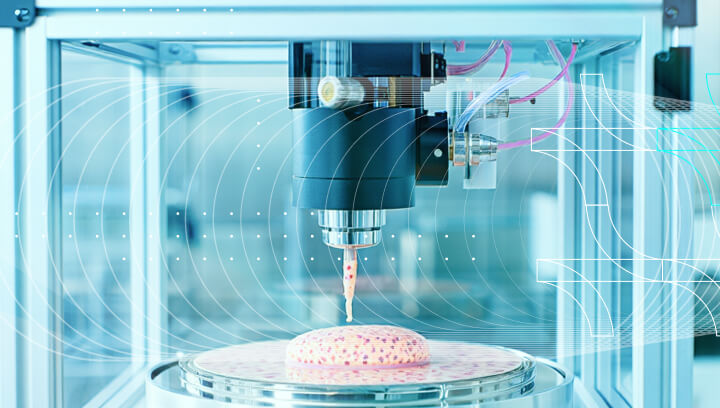
Use cases of robotics in drug manufacturing
The use of robotics and automation is especially critical in aseptic manufacturing environments. A clean room robot is particularly valuable in Grade A zones to minimize risks associated with microbial and pyrogen contamination.
- Aseptic vial filling and injectable preparation: Robots are utilized in aseptic environments for filling operations, such as in a robotic vial filling line. Compounding robots (like CytoCare® and APOTECAchemo) are employed for the automatic preparation of injectable cytotoxic drugs in an aseptic field. This process typically achieves higher accuracy and reduced drug contamination risk compared to manual compounding.
- Sterile process transfer and intervention reduction: Robotics and automation are systems that can help minimize the risk of contamination. Examples of that include automated lyophilizer loading and sterilization in place.
- Automated bioprocessing and formulation development: Robotics is accelerating the innovation stage of drug formulation, often combined with Artificial Intelligence (AI) and Machine Learning (ML).
Role of robotics in laboratory automation
Key areas where robotics is transforming laboratory automation include:
- High-throughput screening (HTS) relies heavily on automation and computerized technology.
- Automated sample preparation (automated workflows) accelerates and minimizes the materials required for activities like drug formulation development.
- Self-driving labs (SDLs) prepare and test machine-learned hypotheses with computerized lab equipment.
- Autonomous preparation and characterization can test formulations suggested by algorithms without manual intervention.
- Liquid Handling Robotics (LHR) automates time-consuming and repetitive liquid transfer tasks necessary for preclinical formulation development. In one study, the LHR platform prepared 128 unique SLN compositions for characterization, with the high-performing formulations achieving up to a 3,000-fold enhancement in drug solubility. [4]
Robotics in pharmaceutical packaging and logistics
Robotics is widely employed in processes categorized as industrial automation due to their rigid nature.
- Pick-and-place operations require repetitive object handling, which is a perfect robotics use. SCARA robots are widespread due to their flexibility and speed.
- Automated palletizing is an end-of-line process, where technology can be integrated. Robot applications can span the entire pharmaceutical production chain, from the active pharmaceutical ingredients (API) up to the final packaging and palletizing. Robotics is already widely used at the secondary packaging stage. Secondary automated packaging is where products are prepared for distribution (e.g., placing medicine bottles into cases, cases onto pallets).
- Vision-based verification and quality control – Robotic systems with sophisticated sensors and software technologies help maintain quality and traceability during packaging and labeling. They are relied upon extensively for quality control and labelling processes. [4,5]
Regulatory challenges and limitations of robotics in pharma
The robotic-assisted manufacturing introduces specific regulatory challenges and strict requirements that must be met to ensure drug quality and patient safety. Regulatory bodies worldwide, including the EMA and FDA, expect robotic systems to comply with GMPs and detailed guidelines such as the EU GMP Annex 1.
1. Compliance with international regulatory frameworks (EMA, FDA, and GMP)
The pharmaceutical market is highly regulated because the quality and safety of medicines directly impact patient health. Automation solutions must operate in step with the fundamental regulations – Good Manufacturing Practices (GMP) and Good Laboratory Practices (GLP).
- EU GMP Annex 1 (2022 Release): The release of Annex 1 (2022) is particularly significant. Annex 1 introduces a holistic approach that requires a Contamination Control Strategy (CCS) and Quality Risk Management (QRM) to guide the selection and implementation of automation.
- Minimizing human intervention: The Annex 1 emphasizes minimizing human error and interference in the manufacturing line, as personnel are considered the key source of microbial contamination
- FDA compliance: Pharmaceutical manufacturers are closely watching Annex 1 developments, knowing that the principles and provisions are likely to affect U.S. Food and Drug Administration (FDA) guidelines. Automated systems used for quality control, for example, must verify compliance with standards such as 21 CFR Part 11. [6]
2. Validation and qualification of robotic systems
Robotic systems must be rigorously qualified and validated according to the relevant sections of GMP guidelines. This is crucial to demonstrate that the robot performs its intended function reliably without compromising product quality. To ensure GMP compliance, the robot must be subjected to various tests to verify its suitability for the environment.
Want to know more about GMP – check out our blog article GMP Compliance: All You Need to Know
3. Contamination Control (Aseptic Environments)
In aseptic production, the robot’s key role is to reduce contamination risk. Robots achieve this by avoiding the continuous presence of human operators.
- Aseptic operation: In barrier systems like RABS, the robot typically operates in the Grade A internal environment (aseptic area), while the operator works in the surrounding Grade B environment.
- Airflow considerations: Robots must be integrated carefully, as moving robotic arms can create turbulence, potentially interfering with the airflow or compromising the asepsis of a test.
4. Data integrity and traceability
Automation requires the management of captured data through digitalization.
- Traceability: Automated systems log all critical steps during testing to document that the procedure was performed correctly.
- ALCOA principles: Data integrity must be guaranteed by following ALCOA principles (attributable, legible, contemporaneous, original, and accurate), as described in GMP-Annex 11 on Computerized Systems.
- Enhanced analysis: Digitalization enables in-depth data analysis using machine learning and AI tools. This allows for the early identification of drift trends and nonconformities, ensuring quality robustness and facilitating prompt corrective and preventive actions (CAPA). [6, 7, 8]
Future trends in pharmaceutical robotics
A market analysis for the Pharmaceutical Robots Market projects substantial growth from USD 198.9 million in 2024 to USD 490.1 million by 2034. [9] This means that a lot of improvements will be included in pharma robotics.
AI-powered robotics are moving beyond traditional “industrial automation” toward “innovation automation”. Innovation automation focuses on R&D breakthroughs and generating intellectual property. This will potentiate benefits significantly more valuable than merely streamlining existing processes.
The continued evolution and collaboration of technologies will characterize the future of healthcare. Future advancements are expected in areas such as autonomous surgery, personalized treatments, and the establishment of “smart hospitals”. Specific robotic applications will expand to include personalized medicine production. These robots will quickly adapt to diverse medicine formulations and individual patient needs.
Frequently Asked Questions (FAQ)
What are pharmaceutical robots?
Pharmaceutical robots are automated systems for sterile manufacturing and lab workflows. They handle precise or hazardous tasks with accuracy that supports GMP compliance.
How are robots used in pharmacy automation?
Robots prepare doses, manage medication storage, and support sterile compounding with tight accuracy controls. Many systems also track every action in hospital and retail pharmacy settings.
Do robots replace human workers?
Robots shift people away from repetitive tasks rather than removing them. Teams move into higher-value decision work that automation cannot complete on its own.
How do robots reduce contamination risk?
Robots operate without shedding particles or introducing microbial risks, unlike humans. Their controlled and monitored motions help maintain sterility in GMP-grade environments.
What robotic technologies operate in pharma today?
Common systems include robotic arms, AGVs, compounding robots, autosamplers, and machine-vision inspection units.
Conclusion
Manual processes will always have a place in early R&D and small-batch environments. Yet robotics is rapidly becoming the standard in sterile and high-volume pharmaceutical manufacturing and life sciences. To unlock their full potential, organizations must first build a strong digital foundation. This creates a seamless ecosystem where robots and people work together to deliver more reliable medicines to patients who depend on them. If you are ready to elevate your manufacturing and patient care, contact us at BGO Software.
References:
[1] Harrison, R. (2016). Phase II and phase III failures: 2013–2015. Nature Reviews Drug Discovery, 15(12), 817–818. https://doi.org/10.1038/nrd.2016.184
[2] Mohimtule, S., & Malgundkar, H. (2025). AI, automation, and robotics in pharmaceutical industry. International Journal of Pharmaceutical Sciences, 3(10), 1108–1130. https://doi.org/10.5281/zenodo.17337496
[3] MilliporeSigma. (2021). Robotics & automation on the brink of transforming pharma QC: Projects underway to boost the reliability, data integrity and productivity of microbiological testing (Ver. 1.0). Merck KGaA. http://sigmaaldrich.com/deepweb/assets/sigmaaldrich/marketing/global/documents/380/892/robotics-automation-wp8358en-mk.pdf
[4] Bannigan, P., Hickman, R. J., Aspuru-Guzik, A., & Allen, C. (2024). The Dawn of a New Pharmaceutical Epoch: Can AI and Robotics Reshape Drug Formulation?. Advanced healthcare materials, 13(29), e2401312. https://doi.org/10.1002/adhm.202401312
[5] Shin, S., Koo, J., Kim, S. W., Kim, S., Hong, S. Y., & Lee, E. (2023). Evaluation of Robotic Systems on Cytotoxic Drug Preparation: A Systematic Review and Meta-Analysis. Medicina, 59(3), 431. https://doi.org/10.3390/medicina59030431
[6] Rapid Micro Biosystems. (2021). Making automation the standard: An Annex 1 preview [White paper]. https://www.rapidmicrobio.com/hubfs/Annex-1_White-Paper_RMB.pdf
[7] Tanzini, A., Ruggeri, M., Bianchi, E., Valentino, C., Vigani, B., Ferrari, F., Rossi, S., Giberti, H., & Sandri, G. (2023). Robotics and Aseptic Processing in View of Regulatory Requirements. Pharmaceutics, 15(6), 1581. https://doi.org/10.3390/pharmaceutics15061581
[8] Gerogiannis, A., & Coulibaly, B. (2025). Pharmaceutical ethics in the age of automation and remote dispensing. Pharmaceutical Regulatory Affairs: Open Access, 14(4), Article 488.
[9] Global Market Insights. (2025, August). Pharmaceutical robots market size report, 2025–2034 (Report No. GMI3922). https://www.gminsights.com/industry-analysis/pharmaceutical-robots-market

Yoanna is a Technical Copywriter with a keen interest in healthcare innovations and medicine. She is dedicated to crafting clear and engaging content that highlights the latest advancements and trends in the medical field.
link to the author’s linkedin profile